
Craft Notes
Plywood vs Solid Wood: Why I Build With Grade A Plywood
Many people think solid wood is always better and plywood is the cheap option. In furniture building it is often the other way around.
I get asked about this a lot, so here is my honest answer. I build my pieces with grade A plywood, the top face grade, because I want them to look good and hold up for a long time in your home, wherever that home is.
Why solid wood is not always the better choice
Solid wood is alive in a way. It takes in moisture from the air and gives it back, so wide boards expand and shrink through the seasons. On a cabinet that can mean doors that stop closing well, panels that crack or tops that cup. Furniture makers have to design around that movement, and owners have to look after it.
Why I choose grade A plywood
Stable in every climate
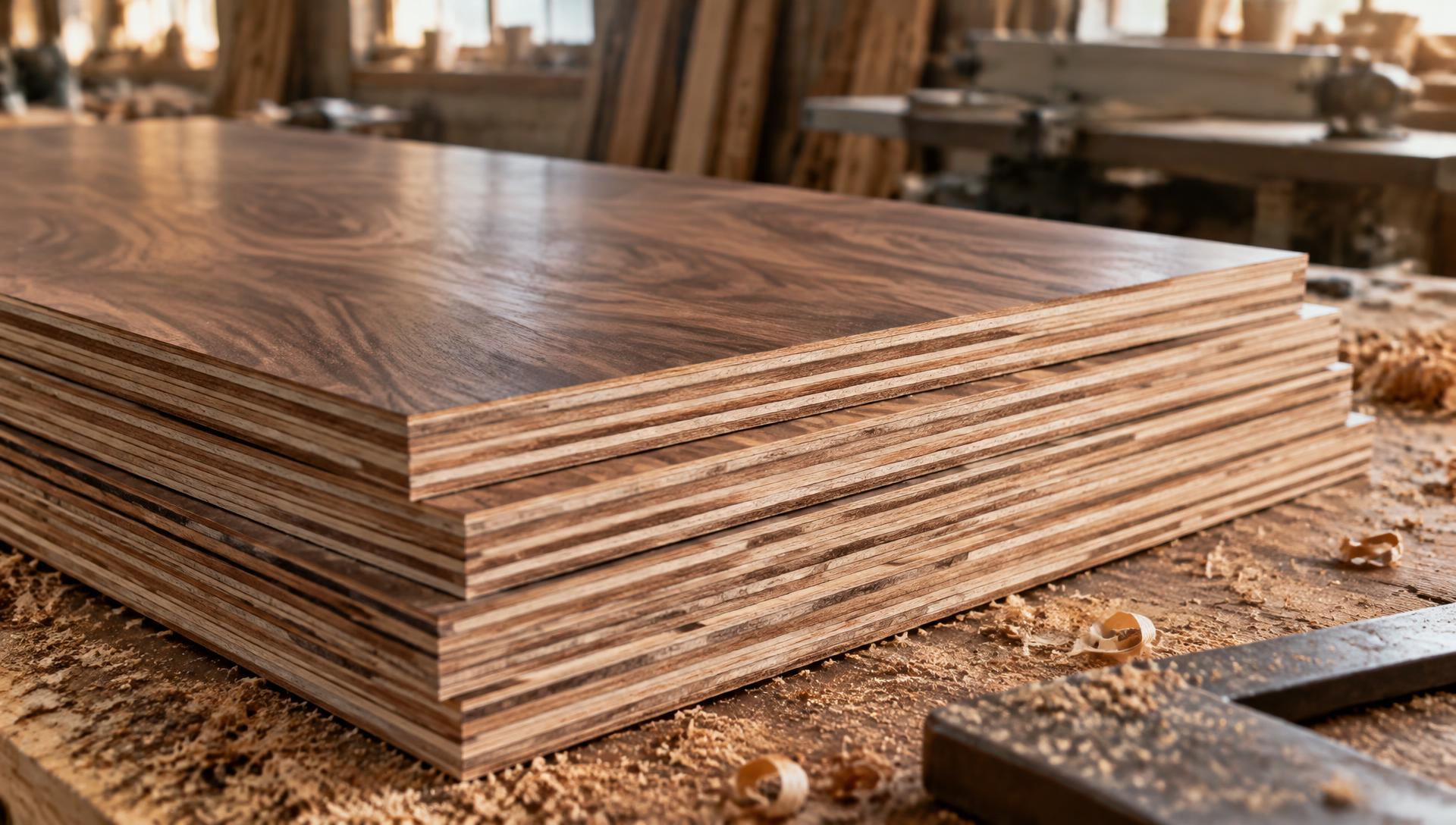
Plywood is made of thin wood layers glued with the grain crossing. That cross grain keeps it from swelling, shrinking and warping the way a wide solid board can when the air gets humid or dry.
Built to last
Doors stay square, panels stay flat and joints stay tight for years. For a piece that ships across the country to a different climate, that matters a lot.
Very low maintenance
No seasonal gaps to worry about and no regular oiling to keep cracks away. A soft cloth is usually all it needs.
Uses less wood
A beautiful hardwood face goes much further on plywood than as a solid board, so each piece needs less of it.
Plywood is part of Mid Century history
Plywood is not a shortcut. It was one of the defining materials of Mid Century design. Many of the premium pieces from that era were built with plywood and veneered panels rather than solid boards, because designers loved how stable it was and the clean, light shapes it made possible. Building with it is part of staying true to the style.
Why it is not the cheap option
There is a big difference between grade A plywood and the particle board or thin laminate used in mass market furniture. Grade A has a clean, even face with very few repairs, and it costs much more than lower grades. Working with it well also takes time: careful cutting so the face stays perfect, finished edges, solid joinery and a hand applied finish. That is why my pieces are built to order over 4 to 5 weeks instead of coming out of a box.
Better for nature too
Because plywood makes more of every log, a piece needs less wood than the same piece in solid boards. Choosing it is one small way I can help protect the forests that give us such beautiful material.
See it for yourself
Browse my pieces, or tell me about your space and I will build one that fits.