
Furniture Guide
The Ultimate Guide to Record Player Cabinets and Vinyl Storage
How to choose a record player stand or vinyl storage cabinet that fits your collection, your equipment, and your room.
A good record player cabinet does three jobs at once: it holds your turntable at a comfortable height, stores your records upright and protected, and looks like a piece of furniture you are proud of. Here is how I help my customers find the right one.
Start with your collection, not the cabinet
Count your records before you shop. A collection of 80 to 120 records fits comfortably in a compact two-door cabinet. If you are past 200 records and growing, look for a longer sideboard-style piece with dedicated vinyl compartments so nothing gets crammed or stored at a slant.
Leave room to grow. Most collectors expand faster than they expect, so I always suggest choosing a cabinet rated for at least a third more records than you currently own.
How much storage do you need
| Collection size | Recommended cabinet |
|---|---|
| Under 100 records | Compact stand, 30 to 40 inches wide |
| 100 to 200 records | Two-door cabinet, 40 to 54 inches wide |
| 200 to 350 records | Long sideboard, 55 to 72 inches wide |
| 350 records or more | Go custom with dedicated record dividers |
Height, depth, and turntable fit
The top surface matters more than any other measurement. Most turntables need a platform at least 17 inches wide and 14 inches deep, plus a few inches of clearance behind for cables and the tonearm. A cabinet depth of 16 to 20 inches works for nearly every turntable and amplifier pairing.
For height, I build most record cabinets between 26 and 34 inches tall. That puts the turntable at a comfortable level for cueing records while standing, and keeps the cabinet in the classic low-slung mid century proportion.
Choosing the right look
Warm walnut
The classic mid century choice. Walnut grain pairs beautifully with brass details and warm room tones.
Light oak
White oak and red oak feel bright and modern, perfect for airy rooms and Scandinavian-leaning spaces.
Cane and rattan
Woven door panels soften the look of the cabinet and let speaker sound pass through when components live inside.
Bold and dark
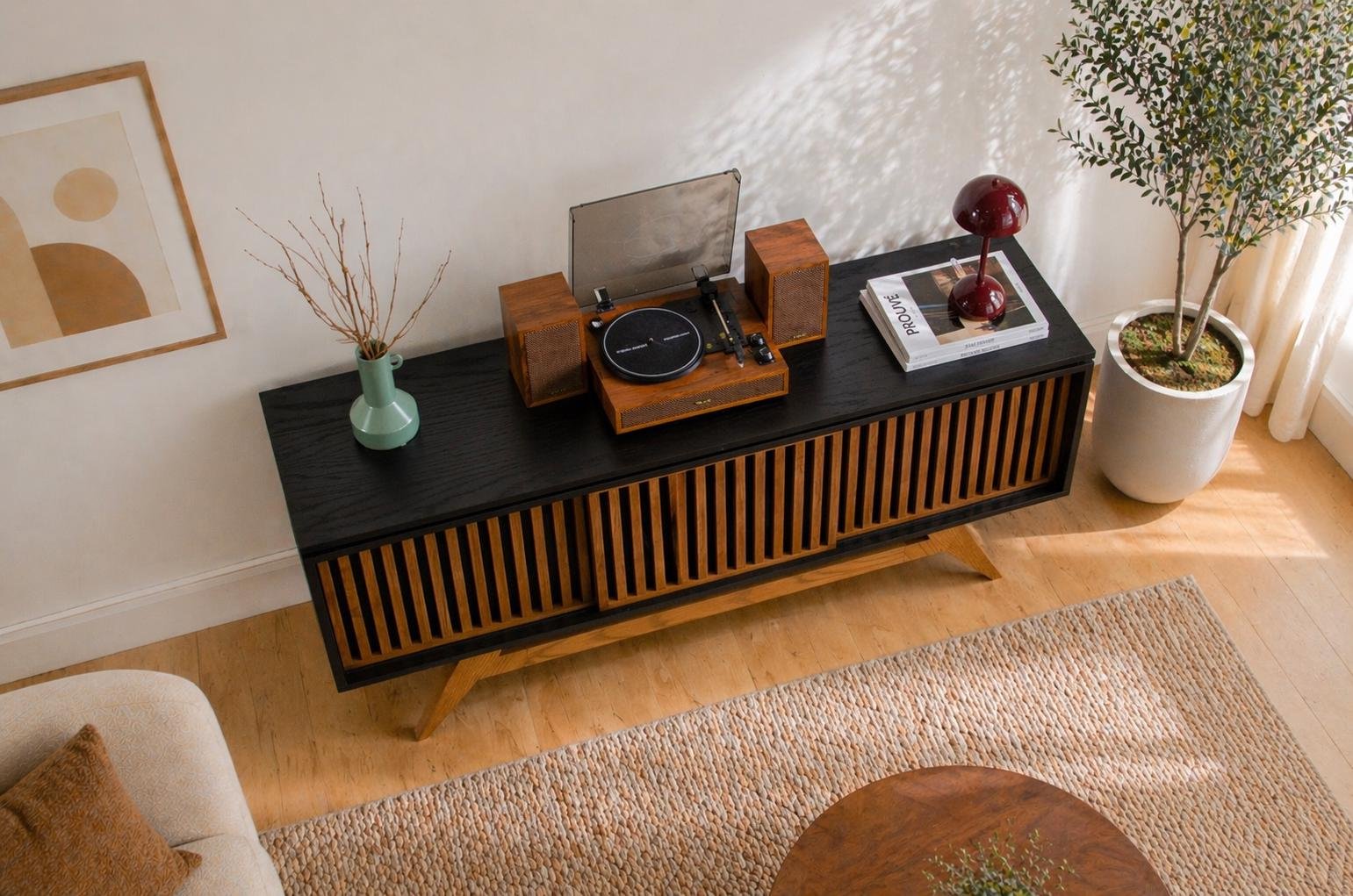
Ebonized or black oak cabinets create contrast and make a colorful record wall the star of the room.
Planning for your equipment
- Turntable: Confirm the top surface is deep and wide enough, with rear clearance for the tonearm and cables.
- Amplifier and receiver: If your amp lives inside the cabinet, ask for ventilation at the back and a shelf rated for its weight.
- Speakers: Bookshelf speakers can sit on top beside the turntable. If speakers go inside, cane or slatted doors let the sound out.
- Cable management: Look for cutouts or open backs so power and audio cables route cleanly to the wall.
When to go custom
If your collection is large, your equipment is unusual, or you have a specific wall width to fill, a custom record cabinet is the answer. I can size the vinyl compartments to your collection, add dividers, amplifier shelves, and cable routing, and match the wood and finish to the rest of your room.
Most custom record cabinets ship within 4 to 5 weeks of build start, and I send progress photos so you can see your piece come together.
Ready to find your record cabinet?
Browse my handcrafted record player stands and vinyl storage cabinets, or tell me about your collection and I will design a piece that fits.